
STRATEGY • GROWTH • INNOVATION
Polyester Yarn Explained: Strength, Versatility and Everyday Uses
Introduction
Look at the label on your sportswear, curtains or travel bag and there is a good chance it says polyester. It is one of the most widely used fibres in the world, valued for its durability, wrinkle resistance and versatility across fashion, home textiles and industrial uses.
In this article, we explain what polyester yarn is, the main types available, what makes it so useful and what buyers should look for when sourcing it.
What is polyester yarn?
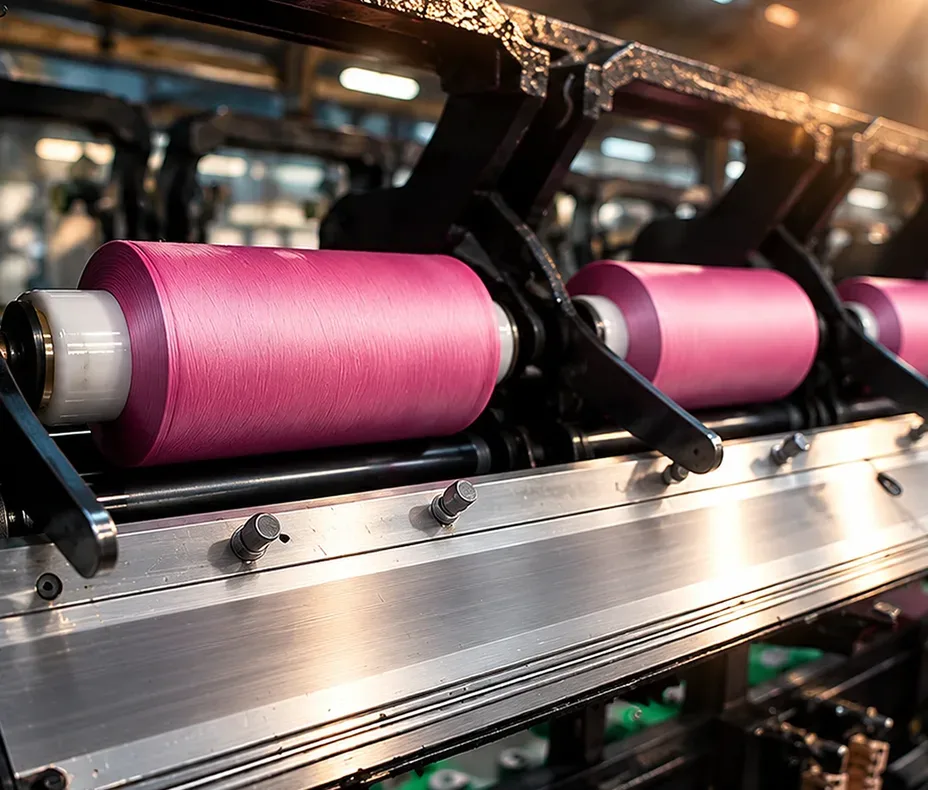
Polyester is a synthetic fibre made from polyethylene terephthalate, usually called PET, the same family of material used to make many plastic bottles. To make yarn, PET is melted and pushed through very fine holes in a plate called a spinneret. This forms long, continuous threads known as filaments, which are cooled, stretched and wound into yarn.
Polyester can also be cut into short lengths, called staple fibre, and spun into yarn in much the same way as cotton. This gives the yarn a softer, more natural feel.
The main types of polyester yarn
Different processes give yarns with different looks and uses:
- POY (partially oriented yarn): an intermediate yarn that is usually processed further
- FDY (fully drawn yarn): smooth and lustrous, often used for woven fabrics and linings
- DTY (draw textured yarn): made from POY, with a soft, bulky feel and some stretch, popular for knitwear and sportswear
- Spun polyester yarn: made from staple fibre and used alone or blended with cotton or viscose
- Recycled polyester yarn: made from used PET bottles or textile waste, reducing the need for new raw material
Why polyester is so widely used
Polyester's popularity comes down to a set of practical strengths:
- Strength: it resists stretching, tearing and abrasion, so fabrics last longer
- Wrinkle resistance: garments keep their shape and need little ironing
- Quick drying: the fibre absorbs very little water, which suits activewear and outdoor products
- Colourfastness: when dyed well, colours stay bright through repeated washing
- Value: it offers dependable performance at a reasonable cost
Everyday uses
Polyester yarn appears in far more places than most people realise. In fashion, it is used for shirts, dresses, sportswear, jackets and linings, and it is often blended with cotton to combine comfort with easy care. In the home, it is found in curtains, upholstery, bed linen, cushions and carpets.
Beyond clothing and home textiles, high-strength polyester yarns go into industrial products such as seat belts, conveyor belts, ropes, tents and sewing threads. The same basic fibre can be engineered for a soft T-shirt or a heavy-duty strap.
What buyers should look for
Not all polyester yarn is the same. Manufacturers usually check a few key specifications before placing an order:
- Denier and filament count, which describe how fine the yarn is and how many filaments it contains
- Tenacity and elongation, which show how strong the yarn is and how far it stretches before breaking
- Lustre, from bright to semi-dull or full dull, depending on the look the fabric needs
- Dye uniformity, so that colour comes out even across the fabric
- Consistency from one lot to the next, which keeps production running smoothly
A reliable supplier helps manufacturers get these details right every time. At Dinjan Polyester, we supply quality polyester yarn to textile manufacturers and help them match the right yarn to each product.
Conclusion
Polyester yarn has earned its place in everyday life through strength, easy care and versatility. From fashion to home textiles to industrial products, it offers dependable performance at a fair cost.
As recycled options grow and processing keeps improving, polyester will remain a key material for the textile industry for many years to come.